Essential Riding Gear: A Complete Checklist for Every Rider
From helmets to boots, here's everything you need to ride safely and comfortably — and how to choose quality gear that lasts.
Safety First: The Non-Negotiable Gear
Before discussing comfort or style, let's talk safety. Some items aren't optional — they're your insurance policy.
Helmet
A quality riding helmet is non-negotiable. It's the single piece of gear most likely to save your life in a fall.
What to look for:
- ASTM SEI or EN 1384 certification
- Proper fit — snug but not tight, level on your head
- Safety standard compliance (not bike helmets or vintage helmets)
- Replace after any impact, even if there's no visible damage
Price range: $100–$400 Best brands: Troxel, Charles Owen, Tipperary, KASK
Riding Boots
Good boots protect your legs, provide ankle support, and offer proper stirrup grip.
Types:
- English field boots (knee-high, traditional look)
- Western boots (cowboy style, good heel)
- Paddock boots + chaps (shorter, versatile)
What to look for:
- Proper heel height (about 1–1.5 inches to prevent foot slipping)
- Good ankle support
- Broken-in before riding (new boots are uncomfortable)
- Protective toe box
Price range: $100–$500 Best brands: Ariat, Dehner, Cavallo, Tredstep
Body Protector (Optional but Recommended)
A safety vest absorbs impact and protects your ribs, chest, and back if you fall.
Types:
- Flexible vests (everyday riding, jumping)
- Rigid protectors (eventing, cross-country)
Price range: $100–$600 Best brands: Charles Owen, Tipperary, IRH, GPA
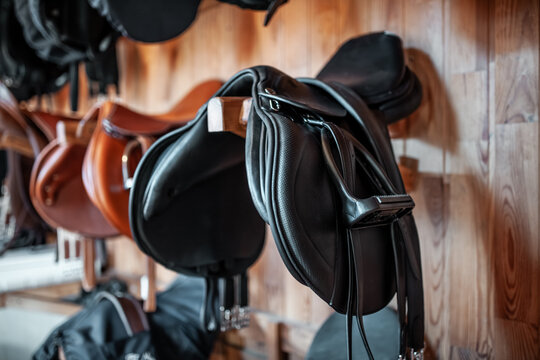
The Saddle: Your Single Biggest Investment
Your saddle is more important than any other piece of gear. A poor-fitting saddle causes back pain, behavioral issues, and wasted money.
English Saddles
Dressage saddle — Deep seat, forward-cut flaps, emphasizes connection
- Price range: $1,500–$10,000+
Jumping saddle — Flatter seat, forward-cut flaps, encourages a two-point position
- Price range: $1,000–$8,000
All-purpose saddle — Compromise between dressage and jumping; good for beginners
- Price range: $1,000–$5,000
Western Saddles
Western saddles are heavier, have a horn (for roping), and distribute weight differently.
- Price range: $1,000–$5,000+ (vary widely by style and materials)
Getting It Right
Never buy a saddle without fitting it to your specific horse. A saddle that fits one horse won't fit another. Professional saddle fitters can cost $50–$150 but save you thousands in the long run.
Bridles, Bits, and Reins
Bridles
A well-fitting bridle is essential for control and comfort. English bridles are typically leather; Western bridles may be leather or rope-based.
Price range: $100–$800
Bits
Bit selection depends on discipline, horse temperament, and communication style. Common types include:
- Snaffle (gentle, most beginner-friendly)
- Curb (Western, more leverage)
- Pelham (English, compromise between snaffle and curb)
Price range: $20–$200
Reins
Reins should be comfortable in your hands and appropriate to your discipline.
- English: Usually leather, 54–60 inches
- Western: Usually longer, often split or tied
Price range: $30–$150
Rider Clothing
Helmet Hair Doesn't Matter — Head Safety Does
But if you're concerned about appearance, here's what looks polished:
English riding attire:
- Riding jacket or blazer
- Breeches or riding pants (fitted, often tan or dark)
- Shirt with collar (white, light blue, or pale colors)
- Black or brown leather belt
- Tall boots (usually black or dark brown)
Western attire:
- Pearl-snap shirt
- Jeans or Western-cut pants
- Western boots
- Cowboy hat or helmet
Casual riding:
- Long pants (never shorts — they expose your legs if you fall)
- Closed-toe shoes (boots are best)
- Fitted top (loose fabric can startle horses)
- Helmet (always)
Price ranges vary widely but budget $30–$150 for quality base layers.
Accessories and Safety Items
Gloves
Gloves improve grip and protect your hands. Essential in rain or cold.
- Price: $20–$60
Crop or Stick
A short crop (24–26 inches) is a communication tool, not punishment. Optional for beginners but useful for advanced riders.
- Price: $15–$50
First Aid Kit
Keep a basic first aid kit at the barn:
- Bandages and gauze
- Antiseptic spray
- Pain reliever
- Tweezers (for splinters)
- Blister treatment
- Elastic wrap
Saddle Pads and Blankets
Saddle pads cushion your saddle and protect your horse's back.
English saddle pads:
- Basic: $30–$80
- Premium (gel, memory foam): $80–$200
Blankets (for turnout and warmth):
- Light turnout: $100–$300
- Heavy winter: $150–$500
Shopping Smart: New vs. Used
Buy new:
- Helmets (safety standard compliance matters)
- Boots (fit is critical)
- Riding pants and shirts
- Gloves
Safe to buy used:
- Saddles (if professionally fitted)
- Bridles and reins
- Saddle pads
- Blankets
- Crops and accessories
Used tack can save 30–50% off retail prices. Check platforms like Facebook Marketplace, eBay, and specialized tack resale shops.
Budget Breakdown: Starter Kit
| Item | Budget | Premium |
|---|---|---|
| Helmet | $100 | $300 |
| Boots | $120 | $300 |
| Breeches/pants | $40 | $100 |
| Shirt & jacket | $60 | $200 |
| Gloves | $20 | $50 |
| Saddle | $1,000 | $5,000 |
| Bridle & reins | $120 | $400 |
| Saddle pad | $50 | $150 |
| Crop | $20 | $50 |
| Total | ~$1,530 | ~$6,550 |
You don't need to spend $6,500 to start riding safely. Quality beginner gear can be assembled for $1,500–$2,500 if you're patient and shop used tack.
Final Thoughts
Your most important gear investment is a helmet that keeps you safe. After that, prioritize a well-fitted saddle and boots. Everything else is secondary. As you develop your skills and discipline preference, you'll naturally expand your collection.
Quality gear lasts decades. A $1,500 saddle used for 20 years costs $75/year. Cheap gear fails and must be replaced, costing more over time. Invest in what matters most, and your riding experience (and safety) will improve dramatically.
Track your gear inventory, maintenance schedules, and equipment costs in EquiLog — so you know when it's time to replace or repair.

We use essential cookies to make our site work and analytical cookies to understand how you use our site. By clicking "Accept All", you consent to the use of these cookies. You can manage your preferences at any time. Read our Privacy Policy.